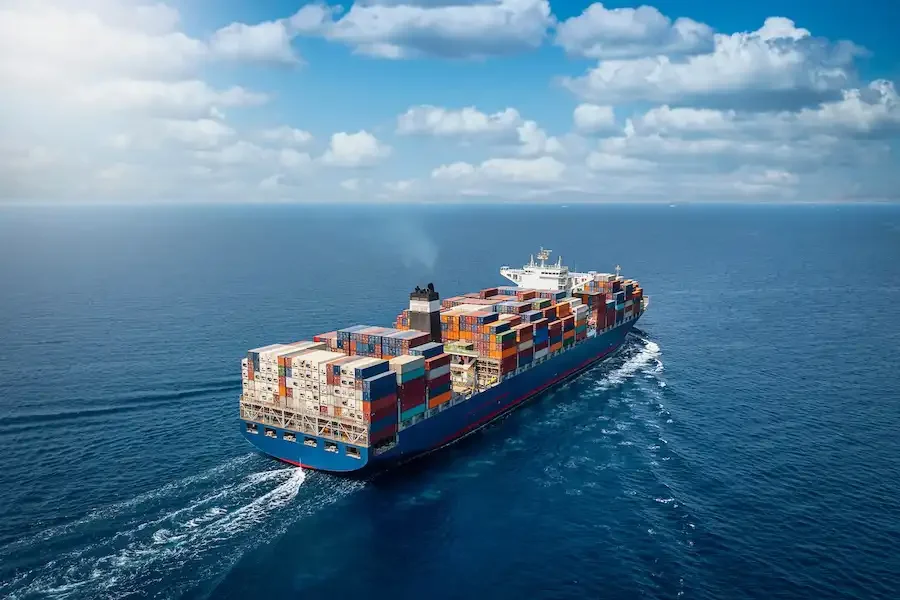

Innovate UK has launched a new competition offering substantial funding to companies developing technologies that can significantly reduce well-to-wake greenhouse gas emissions in the maritime sector.
The Clean Maritime Demonstration Competition (CMDC) Round 7 closes on 15 July 2026 and is split into three strands. The strands vary based on the level of advancement they’ll support and how much funding they offer. Here’s a breakdown:
- Strand 1: Deployment trials – Up to £10.5 million for real-world demonstrations of innovative clean maritime technologies in an operational setting
- Strand 2: Pre-deployment trials – Up to £4.2 million to design, develop and test novel technologies
- Strand 3: Feasibility studies – Up to £700,000, primarily desk-based technical and economic feasibility studies
In this blog, I’ve answered the key questions about this competition, including who is eligible, how much funding is available, and how to apply.
Find Out if You're Eligible Now
To find out if you and your project are suitable for CMDC Round 7, book in a free Competitiveness and Eligibility Assessment. In just 25 minutes, I’ll tell you:
- Whether you’re a strong candidate for this competition
- Other grants you may be eligible for
- What other sources of funding we can help you secure

Never Miss a Funding Opportunity
New grant competitions are opening all the time. Make sure you don’t miss out by subscribing to GrantTree’s newsletter.
Who is eligible for the Clean Maritime Demonstration Competition Round 7?
To lead a project, you must be a UK-registered business of any size, working collaboratively with other organisations. 
To collaborate with a lead, you can be a UK-registered:
- Academic institution
- Business of any size
- Charity
- Not for profit
- Public sector organisation
- Research and technology organisation (RTO)
Innovate UK has identified a number of priority themes for CMDC Round 7; areas it is particularly keen to fund. They are:
- Fishing vessels and inland waterways vessels
- Projects that combine the below Vessel or Infrastructure technology themes with Smart Shipping technology themes
- Retrofitting clean maritime technology to existing vessels
- Zero and near-zero GHG emission fuel systems, such as ammonia or hydrogen
In addition, your project must meet a set of criteria, which vary based on which strand you’re applying to.
Strand 1: Deployment Trials
You must look to conduct a deployment trial of an innovative clean maritime technology in a real-world, operational setting. The trial must last at least 6 weeks and finish before December 2029.
In addition, your project must:
- Include at least one representative end user
- Cover multiple sea states, if your demonstration involves vessels
- Demonstrate significant market potential through a clear commercialisation strategy
- Involve a team with the expertise and experience needed to complete your project successfully
- Have £3 million-£15 million in eligible costs
- Start by 1 April 2027 and last up to 2 years and 9 months
Strand 2: Pre-Deployment Trials
You must design, develop and test an innovative clean maritime technology, without deploying it in a real-world operational environment.
Testing must take place in controlled, land-based environments such as factories or dry docks, and your project should generate the evidence needed to support a future deployment trial.
In addition, your project must:
- Deliver a meaningful pre-deployment trial before March 2028
- Underpin a future deployment by December 2029
- Involve at least one end user
- Demonstrate significant market potential through a clear commercialisation strategy
- Involve a team with the expertise and experience needed to complete your project successfully
- Have £750,000–£6 million in eligible costs
- Start by 1 April 2027 and last up to 12 months
Strand 3: Feasibility Studies
You must undertake a primarily desk-based technical and economic feasibility study into an innovative clean maritime technology. Your project should assess the viability of a solution and build a clear case for a future real-world demonstration, but must not involve substantial development or in-water testing.
In addition, your project must:
- Deliver a meaningful feasibility study before March 2028
- Underpin a future deployment by December 2029
- Involve at least one end user
- Demonstrate significant market potential through a clear commercialisation strategy
- Be delivered by a team with sufficient expertise and experience
- Have £100,000–£1 million in eligible costs
- Start by 1 April 2027 and last up to 12 months
How Much Funding Can I Apply For?
The amount of funding you can apply for depends on whether your project work is commercial/economic in nature, meaning you’re applying on behalf of a business, or not, e.g., you’re applying from an academic institution or research organisation.
Commercial/Economic Work
As a business, the amount of funding you’ll receive depends on which strand you’re applying to, what type of project you’re looking to conduct, and your company’s size.
| Project Type | Micro/Small | Medium | Large |
|---|---|---|---|
| Industrial Research* – Strands 1 and 2 | 70% | 60% | 50% |
| Experimental Development** – Strands 1 and 2 | 45% | 35% | 25% |
| Feasibility Studies – Strand 3 | 70% | 60% | 50% |
Read Innovate UK’s definition of micro, small, medium and large companies.
*Industrial research refers to planned research aimed at acquiring new knowledge for developing new products, processes, or services.
**Experimental development is closer to market — it involves using existing knowledge to develop or improve products, processes, or services.
Example
To work out how much funding you can secure, you simply work out what type of project you’re looking to conduct and determine your company’s size to identify the correct percentage. Then you multiply that by your total qualifying costs.
So, if you were a medium-sized company, looking to complete an experimental development project under Stand 1: Deployment trials, with £8 million in qualifying costs, you could apply for:
£8 million x 35% = £2.8 million.
The remainder of your funding must be ‘match-funded’. That means, derived from other sources, such as revenues, venture investment, or R&D Tax Relief.
Non-Commercial/Non-Economic Work
Research organisations undertaking non-economic activity can share up to 30% of the project’s total eligible costs and can secure:
- Up to 100% of their costs if they are a charity, not-for-profit, public sector organisation or research organisation
- Up to 80% of their full economic costs if they are a Je-S registered institution, such as a university
Je-S is the UK Research Councils’ Joint Electronic Submission system used by universities to submit costs.
How Do I Apply for the Clean Maritime Demonstration Competition?
The application process is the same across all three strands of the Clean Maritime Demonstration Competition Round 7 and is completed via the Innovation Funding Service (IFS) portal.
Your application is split into four sections:
- Project details – This section isn’t scored but provides assessors with important background on your project, including its objectives, scope and innovation.
- Application questions – The most time-intensive part of your application. You’ll need to answer a comprehensive set of questions covering areas such as the need for your project, your technical approach, environmental impact, team, market opportunity and risks. Only some of these questions are scored, but all must be completed.
- Finances – Each organisation in your consortium must submit a detailed breakdown of its project costs, not just the lead applicant.
- Project impact – This section is not scored but provides valuable context on your project’s wider economic, social and environmental benefits.
Your application will be reviewed by five independent assessors. Their individual scores will be combined to determine your final result.
Your final score is, of course, critical. However, Innovate UK will also take a portfolio approach, meaning it may select projects to create a balance of different technologies and risk profiles.
For some strands, including Pre-Deployment Trials, projects that pass the initial assessment may also be invited to an interview stage, where you’ll present your proposal and respond to assessor feedback.
Let GrantTree Maximise Your Funding Chances
Round 7 of the Clean Maritime Demonstration Competition is a fantastic opportunity to secure a substantial amount of funding.
This competition is likely to be highly competitive; however, our grant writing experts can maximise your chances by helping you prepare a compelling application that shows why you deserve to receive a grant.
We have a variety of services designed to suit a range of budgets and support needs, from commissioning an active Innovate UK assessor to provide a detailed review of your application before submission, all the way to writing your application from scratch.
To learn more about how we could help your business increase your chances of grant funding success, and learn what calls you could be eligible for, just get in touch.