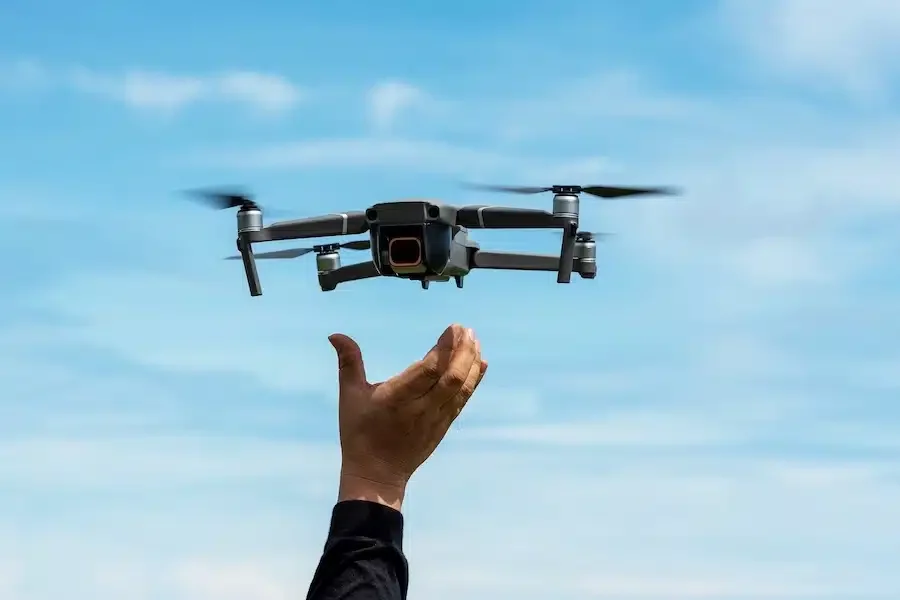

Innovate UK has launched a new competition offering grants of up to £1.25 million to companies developing aviation technologies and systems with both civil and military applications, including uncrewed aircraft, hybrid-electric eVTOLs and eCTOLs, and swarming or autonomous systems.
Closing on 3 June 2026, the Dual-Use aviation systems and autonomy competition aligns with major government priorities, including routine Beyond Visual Line of Sight (BVLOS) Uncrewed Aircraft System operations from 2027 and commercial piloted eVTOL operations from 2028.
Below, I have explained the key things you need to know about this competition before you apply: who is eligible, how much funding is on the table, and what the application process looks like.
Find Out if You're Eligible Now
To find out if you and your project are suitable for this grant, book in a free Competitiveness and Eligibility Assessment. In just 25 minutes, I’ll tell you:
- Whether you’re a strong candidate for this competition
- Other grants you may be eligible for
- What other sources of funding we can help you secure

Never Miss a Funding Opportunity
New grant competitions are opening all the time. Make sure you don’t miss out by subscribing to GrantTree’s newsletter.
Who is Eligible?
Your Organisation
To lead a project, you must be a UK-registered business of any size or a public sector organisation. Academic institutions can’t lead.
This is a collaborative-only competition, and your consortium must contain at least one UK-registered micro, small or medium-sized enterprise (SME) claiming grant funding.
To join the project as collaborators, your organisation must be one of the following UK-registered:
- Academic institutions
- Businesses of any size
- Charities
- Not-for-profits
- Public sector organisations
- Research and technology organisations (RTOs)
Your consortium can include a maximum of five funded partners.
No one partner can account for more than 70% of the total eligible grant. Your project must also include a UK customer or operator as a partner.
Your Project
Your project must:
- have a grant funding request of between £300,000 and £1.25 million
- last between 8 and 12 months
- start from 1 September 2026 and end by 31 August 2027
All funded work must be carried out in the UK, and you must intend to exploit the project results from or within the UK.
Your project must also:
- be at Technology Readiness Level (TRL) 5 or above at system level
- develop or integrate dual-use aviation technology, meaning technology with both civil and military applications
- focus on uncrewed aircraft systems (UAS), hybrid-electric eVTOLs, hybrid-electric eCTOLs, or swarming, collaborative or autonomous aviation systems
- have a clear pathway to commercialisation in both civil and defence markets
- include a UK customer or operator as a project partner
How Much Funding Can I Apply For?
The amount you can claim depends on your organisation’s type and size and the sort of research your project involves.
Individual grants range from £300,000 to £1.25 million.
Applying as a Company
| Project Type | Micro and Small | Medium | Large |
|---|---|---|---|
| Industrial Research* | 70% | 60% | 50% |
| Experimental Development** | 45% | 35% | 25% |
*Industrial research refers to planned research aimed at acquiring new knowledge for developing new products, processes, or services.
**Experimental development is closer to market. It involves using existing knowledge to develop or improve products, processes, or services.
Funding Example
Let’s say your project’s total eligible costs are £1 million. As a small business carrying out industrial research, you can claim 70% of these costs as a grant, which gives you £700,000. You will need to fund the remaining £300,000 from other sources, like R&D Tax Relief, investment or loans.
Applying as a Non-Commercial Organisation
Non-economic organisations can share up to 30% of the total eligible project costs and are funded at higher rates:
- Up to 100% of eligible costs if you are a charity, not-for-profit, public sector organisation, research organisation, or RTO
- Up to 80% of full economic costs (FEC) if you’re a Je-S-registered institution, like a university
How Do I Apply?
The deadline for applications is 3 June 2026.
Applications are submitted via Innovate UK’s Innovation Funding Service (IFS) portal.
The application is split into four sections:
Project Details
In this unscored section, cover:
- Application details
- Application team
- Project summary
- Public description
- Research category
- Scope
Most answers in this section are limited to 400 words.
Application Questions
There are 16 questions in total:
- 6 unscored administrative questions covering topics like applicant location, animal testing, permits and licences, international collaboration, export licences and Trusted Research and Innovation
- 10 scored questions covering your need or challenge, approach and innovation, team and resources, market awareness, outcomes and route to market, wider impacts, project management, risks, added value, and costs and value for money
You can include appendices (PDFs of up to two A4 pages) for the approach, team, project management and risk questions.
Finances
Each partner enters their own project costs, organisation details and funding details into the application.
Project Impact
Each partner must complete the Project Impact questions before the application can be submitted.
Your application will be reviewed by five independent assessors. Their individual scores will be combined to determine your final result.
If you’re successful, you’ll be notified by 8 July 2026.
How Do I Apply?
GrantTree has 15 years of experience helping startups, scaleups and established businesses secure over £500 million in innovation funding.
We offer Full Service Write, Grant Review and Grant Matching, plus our bespoke Elevate package, which combines writing, review, coaching and matching to maximise your chances of success.
We work closely with active Innovate UK assessors to understand exactly what it takes to prepare a compelling application.
To find out how we can help, just get in touch.